growth & retention
Growth hacking the AARRR funnel for a scale-up FinTech.
Curve simplifies your finances: one smart Mastercard, one smart app. As Lead Designer on the Growth and Retention team, I tackled declined transactions, the #1 source of churn, and shipped a fallback card feature that cut related support tickets by 93%.
- Lead Product Designer
- Research, UX & UI Design, Interaction Design
- 1 Designer, 1 PM, 1 Eng Lead, 4 Engineers
- User testing & interviews
The problem
Declined transactions were the #1 source of churn.
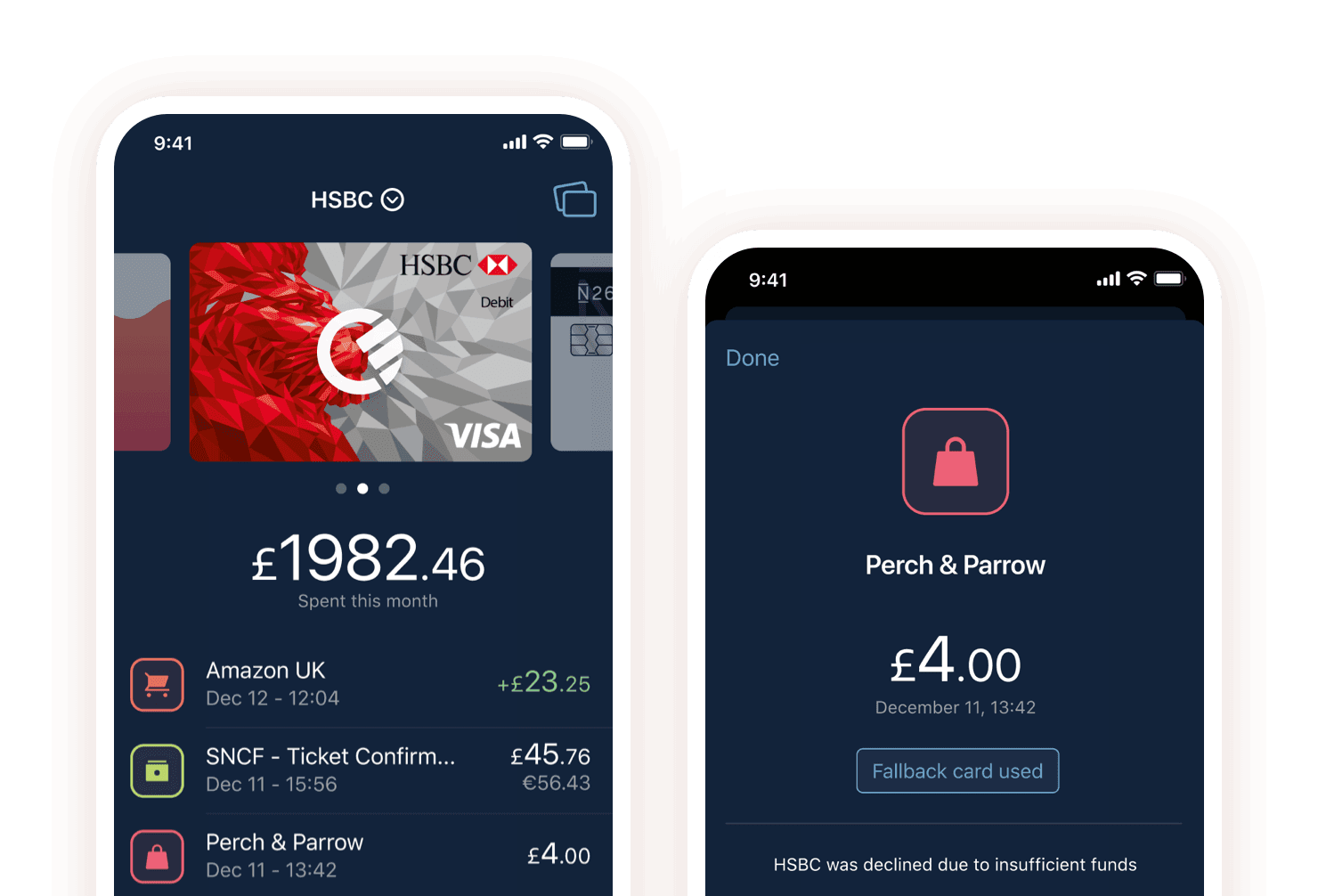
Curve bundles all your cards into one smart Mastercard and one smart app. When an underlying card declined, the Curve transaction failed with it, at the checkout, the worst possible moment. Users blamed Curve, flooded support, and churned.
I mapped the AARRR funnel end to end and found retention leaking exactly here.
The solution
The Fallback Card: failure users never see.
Users nominate a backup card; on any decline the backend submits a new transaction within 2 seconds. The purchase goes through, and the user finds out afterwards, not at the till. Related support tickets dropped 93%.
The screens
Research, Prototypes & Shipped Features
Community Research
Reading through Zendesk boards and speaking directly with beta testers through the community channel to understand core problems and what users were trying to achieve.
Early Wireframes
Low-fidelity mockups exploring different approaches to wallet views, settings, and transaction details, tested on usertesting.com to iterate quickly before committing to high-fidelity work.
What We Shipped
The updated flow solves most of the problems gathered from research with a much-improved UI throughout: clear copy, logical information architecture, and friendly language. Bottom sheet entry point, card-level controls, quick switching, edge-case handling, smart notifications, and a redesigned transaction view.